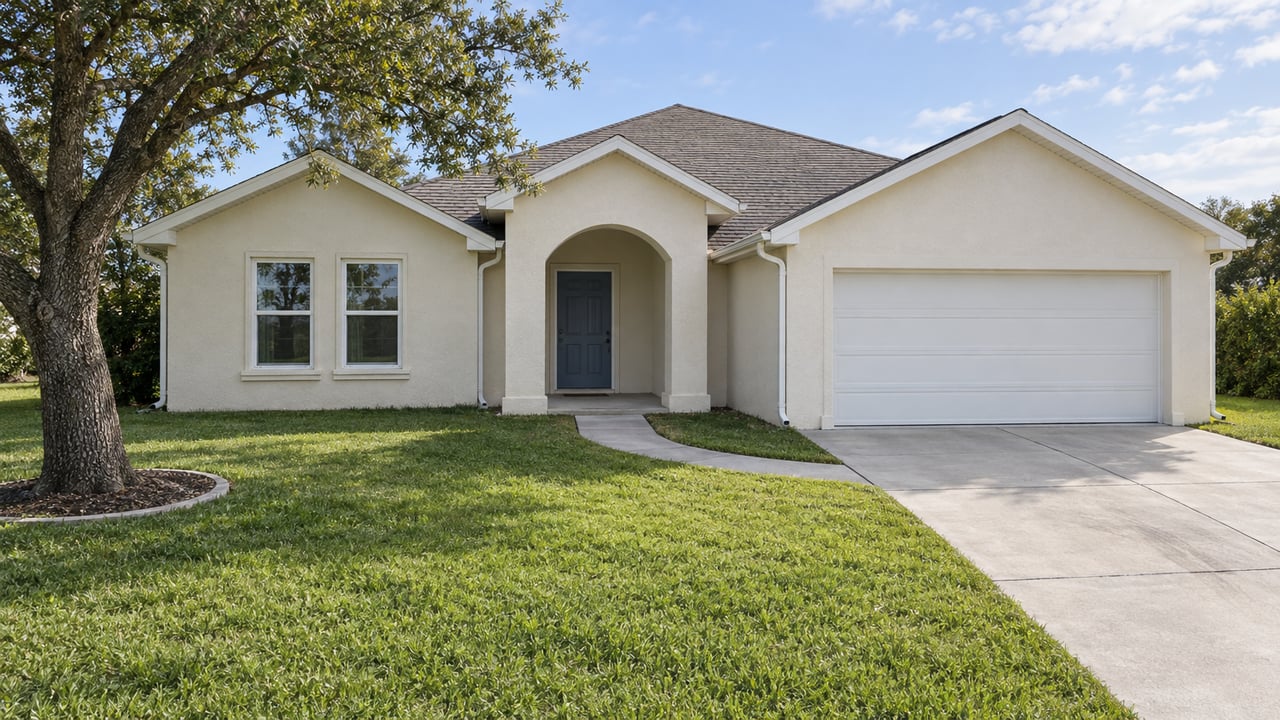
When Isaias Hits Before Closing: How a Pending Navarre Sale Moves Forward
October 15, 2026
October 15, 2026
If you have a Navarre home under contract on the standard Florida Realtors/Florida Bar forms, Hurricane Isaias damage is handled by one number. When restoring the property costs 1.5% of the purchase price or less, the seller pays for it and the closing goes ahead. Above that, the buyer decides whether the deal continues. For most homes in Navarre's typical price range, 1.5% comes out to a few thousand dollars, and a roof or siding repair can pass that quickly.
Isaias came ashore near Destin at about 8:30 p.m. CDT on October 9, 2026. The National Hurricane Center put maximum sustained winds at 105 mph. At 7:30 p.m. CT the next evening, the Pensacola News Journal reported 78,590 FPL customers without power in Santa Rosa County. The same live coverage described Navarre Beach homes with missing siding and shingles and blown-out lower-floor panels, while other homes looked untouched. In Santa Rosa County's 6 p.m. update on October 12, evacuation orders for Zones A, B and C were lifted and residents were cleared to start going home. For people with pending sales, that's when the contract work starts.
The rule is in Standard M of the Florida Realtors/Florida Bar AS IS contract. The standard FR/BAR form has the same threshold.
"If, after Effective Date, but before Closing, Property is damaged by fire or other casualty ('Casualty Loss') and cost of restoration (which shall include cost of pruning or removing damaged trees) does not exceed 1.5% of Purchase Price, cost of restoration shall be an obligation of Seller and Closing shall proceed pursuant to terms of this Contract."
If repairs aren't done by closing, the form sets aside 125% of the estimated cost to finish, but that amount can't go over the 1.5% cap. The seller pays actual costs up to the same cap and gets back whatever isn't used. The prices below are examples only, picked from the range many Navarre families shop in. They aren't market figures.
| Example purchase price | 1.5% threshold | Escrow on a $3,000 unfinished repair | Escrow on a $5,000 unfinished repair |
|---|---|---|---|
| $350,000 | $5,250 | $3,750 | $5,250, capped |
| $450,000 | $6,750 | $3,750 | $6,250 |
| $600,000 | $9,000 | $3,750 | $6,250 |
On a $350,000 home, a $5,000 repair estimate is still under the threshold. The 125% escrow would be $6,250, though, so the cap brings it down to $5,250. If the job runs over the estimate, the buyer's protection stops at $5,250 anyway, since that's the most the seller owes.
When restoration costs more than 1.5% of the price, the contract gives the decision to the buyer. The buyer can take the property "as is" along with the 1.5%, or get the deposit back, which releases both sides from the contract.
That's why the estimate matters so much. Across most of the 1.5% range, every extra dollar of damage is the seller's cost. Once the estimate passes the line, the buyer has a way out of the contract. A seller looking at a $5,100 estimate on a $350,000 home and a seller looking at a $5,400 estimate are in very different spots, even though the repairs are nearly the same.
Trees are handled separately. The cost of restoration includes pruning or removing damaged trees, and the seller's only obligation for tree damage from a casualty or other natural occurrence is that pruning or removal. A big oak that fell across the yard adds removal costs to the total, and those costs count toward the 1.5%. The form doesn't require the seller to replace the tree's shade or its value.
An estimate assumes the work can be done the usual way. On October 12, Santa Rosa County Building Inspections said owners could take temporary protective measures, but permanent repairs may need permits and inspections. The county also said the emergency declaration doesn't automatically waive permit rules. A roof under a tarp is protected, but it isn't restored. If the permanent repair needs a permit, that repair is the one the escrow math depends on.
The county set up priority "Work With" permits so licensed, registered electrical contractors can get service restored faster. That's useful for a pending sale, because Standard L of the contract has the seller providing utilities and access for appraisals, inspections and a walk-through, or a follow-up walk-through if needed, before closing.
Cleanup runs on the county's schedule too. In its October 11 recovery update, the county expected the first debris pickup on publicly maintained roads to start October 14. Vegetative debris and construction/demolition debris go out separately, piled loose at the public right-of-way. A walk-through scheduled before the pickup crews come may still show piles at the curb.
For military families buying with a VA loan, the permit question also affects the loan. VA's lender guidance on natural disasters covers properties appraised on or before a declared disaster date that haven't closed. Those loans need a VA appraiser's visual inspection, a lender certification that the home wasn't damaged or has been restored to pre-disaster condition or better, and a veteran certification accepting the home's current condition. If local law requires the property to be inspected and approved by the local building authority, that report goes in the file too.
If there are signs the value dropped, the lender has to order a new appraisal with a current value, and the loan amount goes down if the value did. VA doesn't pay for disaster-related inspections or repairs. The veteran can't be charged for the lender's disaster inspection, but can negotiate with the seller over the cost of a new appraisal, repairs and re-inspections.
Whether any of this applies to Isaias depends on the type of declaration. When we checked, FEMA's listing showed EM-3655-FL, an Emergency Declaration dated October 9, 2026, and not a Major Disaster Declaration. That release covered Santa Rosa and Okaloosa among 27 counties. In its October 12 update, Santa Rosa County said the federal declaration covered government response costs only and FEMA individual assistance wasn't available yet. VA tells lenders to check FEMA for counties, declaration dates and any amendments. If the declaration is amended, the requirements on a VA file can change. Your lender makes that call for your loan. FHA's version of these rules is in HUD Handbook 4000.1, section II.A.7.c, which covers properties in presidentially declared major disaster areas before endorsement.
Damage isn't the only thing that can stall a closing. Both standard forms list hurricanes as Force Majeure. That covers delays in performance and in essential services, insurance and approvals. Affected deadlines, including closing, get a reasonable extension of up to seven days after the event stops preventing performance. If it keeps preventing performance more than 30 days past the closing date, either party can terminate. Paragraph 5(b) applies that extension when essential closing services aren't available, and names hazard, wind, flood and homeowners insurance.
The Isaias timeline in Northwest Florida:
Citizens' suspension lasted less than three days. We found no confirmed report of other carriers' binding status, so buyers with a private insurer should ask that company directly. In practice, the seven-day extension mostly covers how long it takes to get a policy bound, a repair estimate written and a walk-through scheduled.
This is general information about how the standard forms and lender rules work. It isn't legal or financial advice. Your own contract version, lender and insurer decide how these rules apply to you, so check with your attorney, loan officer and insurance agent.
Does the 1.5% include tree removal? Yes. Under Standard M, the cost of restoration includes pruning or removing damaged trees, and that's the seller's only obligation for tree damage.
Can a seller tarp the roof and still close on time? The county allows temporary protective measures, but permanent repairs may need permits and inspections. If the permanent fix isn't finished, the contract's escrow provision covers the remaining work up to the 1.5% cap.
Who pays for a new VA appraisal after the storm? VA's guidance says the appraiser's fee for a post-disaster appraisal is a contractual matter between buyer and seller, and that VA doesn't pay for disaster-related inspections or repairs.
If Isaias hit while you were under contract, Shelby A Baker can go through your contract's risk-of-loss and Force Majeure dates with you, help you line up the repair estimate against the 1.5% math, and coordinate the walk-through with your lender's timeline. Schedule a consultation and we'll work out where your closing stands.
Stay up to date on the latest real estate trends.
Get assistance in determining current property value, crafting a competitive offer, writing and negotiating a contract, and much more. Contact Shelby today to discuss all your real estate needs!