Navarre Beach Condo Due Diligence in 2026: Key Documents
August 6, 2026
August 6, 2026
A buyer walks into a Gulf-front two-bedroom at Summerwind, likes the view, and pulls up the portals on the drive back to the mainland. The median condo price on Navarre Beach was $865,000 in June 2026, with an average sale near $1,035,000 and roughly 128 days on market. Mainland Navarre single-family homes, by contrast, were going pending in under 60 days that same month. The buyer reads that gap as beach-premium hesitation. It isn't. It's a document problem, and the seller has been sitting on it since the 25-year coastal clock started ticking on their building.
That is the thesis of this post. On Navarre Beach in 2026, the price and days-on-market gap between beach condos and mainland Navarre is not really about the water. It is about who bears the cost of Florida's post-Surfside reserve and inspection regime, and the leverage that transfers to the buyer sits inside three specific documents that need to be pulled before the inspection contingency closes.
Florida Statute 553.899, created by SB 4-D in 2022 after the Champlain Towers South collapse and refined by SB 154 and HB 913, requires a milestone structural inspection for residential condominium buildings of three or more habitable stories. The default age trigger is 30 years. Milestone inspections under Section 553.899 are mandatory structural inspections for buildings three or more habitable stories, required at 30 years (or 25 years within three miles of the coast) and every 10 years thereafter.
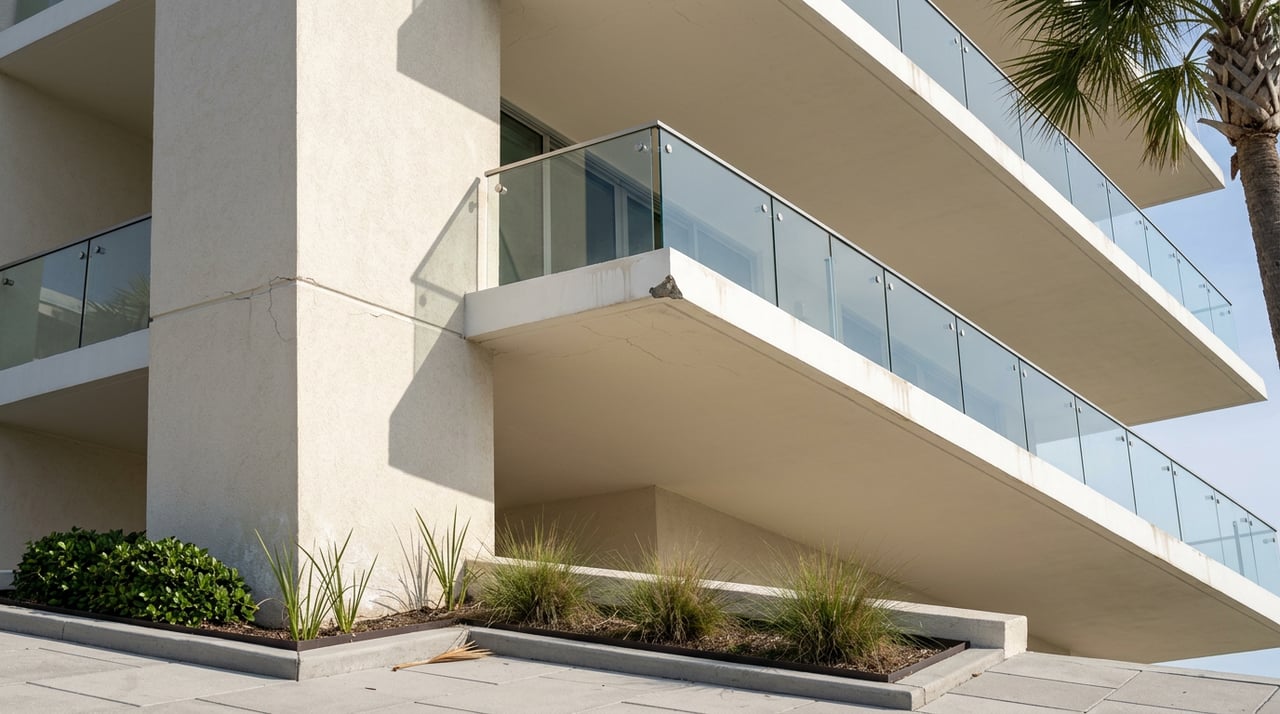
Navarre Beach is a barrier island. Every mid-rise and high-rise on it sits inside that three-mile coastal band. Navarre Beach Regency, a nine-story building of 103 units, was completed in 1997, which puts it at 29 years old in 2026 and well past the coastal trigger. Beach Colony West at 8501 Gulf Boulevard, Caribbean Resort, Summerwind, and the sound-side Palms of Sunset Harbor are all in the same vintage cohort. If the tower you are looking at was topped out before roughly 2001, its board is either finished with its milestone inspection, in the middle of one, or facing a hard deadline.
That deadline is not abstract. Associations existing on or before July 1, 2022, that are unit owner controlled, must have a SIRS completed by December 31, 2025. If an association is required to complete a milestone inspection in accordance with s. 553.899 on or before December 31, 2026, the association may complete the SIRS study simultaneously with the milestone inspection. SIRS completed in conjunction with a milestone inspection must be completed by December 31, 2026. Miss it and the penalties escalate quickly: daily fines exceeding $500 per day, code compliance referrals leading to special magistrate hearings and liens, referral to the Construction Board of Adjustment and Appeals for an unsafe building case (potentially resulting in a vacate order), and reporting to the state Division of Condominiums for noncompliance.
Sellers know this. The 128-day median on the beach is the sound of buildings in the middle of that paperwork.
Three separate documents govern the risk you inherit at closing. They answer three different questions, and a buyer who reads only one is missing two-thirds of the picture.
| Document | Statute | What it answers |
|---|---|---|
| Milestone inspection (Phase 1, Phase 2 if triggered) | FS 553.899 | Is the building physically sound today, and what work does it need? |
| Structural Integrity Reserve Study (SIRS) | FS 718.112(2)(g) | Are the association's reserves on track to fund that work, or is a special assessment coming? |
| Independent insurance appraisal | FS 718.111(11)(a) | Is the master policy insuring the building for what it would actually cost to rebuild? |
The SIRS is the one most first-time condo buyers underestimate. It is not a general reserve study. It looks at eight specific structural and life-safety components: roof, load-bearing structure, fire protection, plumbing, electrical, waterproofing, windows/doors, and any other item over $25,000 affecting those systems. A licensed engineer or reserve specialist assigns each component a remaining useful life and calculates a baseline funding plan. That plan is now enforceable. Starting with budgets adopted January 1, 2025 or later, associations cannot waive or reduce reserve funding for SIRS-required components.
The independent insurance appraisal is the document that gets skipped most often. Under FS 718.111(11)(a), condominium associations must base property insurance on the replacement cost determined by an independent appraisal, updated at least every three years. In a market where expanded flood coverage mandates and rising rates (up 10-15% statewide per recent data) are compressing operating budgets, an out-of-date appraisal is a leading indicator of underinsurance and, therefore, of a future assessment after the next named storm.
Every Navarre Beach condo owner carries a personal HO-6 policy that sits inside the association's master policy. Condo HO-6 insurance covers interior structures, personal belongings, liability, and loss assessment from special assessments. The loss-assessment line is the one to read carefully. It caps how much of a covered-event special assessment your carrier will absorb before the rest becomes cash out of your pocket.
That matters because the special assessments coming out of this regime are not small. The combined effect of mandatory reserves, milestone inspections, and a hard insurance market is a wave of special assessments, some from $10,000 to over $100,000 per unit.
A useful frame from a Florida condo attorney: Strong reserves with a clean milestone report is the ideal profile. Strong reserves with a Phase 2 report identifying defined remediation work is a manageable profile when the reserve number covers the work. Weak reserves with a Phase 2 report identifying significant work is the profile that demands closer review and, often, a renegotiation of price to reflect the assessment exposure.
That third profile is the one hiding inside the 128-day-on-market number.
The moment leverage exists is short and defined. The Florida Condominium Act gives a buyer 3 business days to review the condominium documents after receiving them; the inspection period under the FloridaRealtors/Florida Bar contract is negotiable but typically 10 to 15 days.
Inside that window a buyer has three real jobs:
HB 1021, passed in 2024, made this easier. Associations of a certain size are now required to post governing documents, budgets, and reserve studies to a website or app, so many of these records are pullable before you even ask for the disclosure package.
The specific numeric checkpoints inside the milestone process are worth memorizing before you write an offer: Phase 1 inspections must be completed within 180 days after receiving official notice. Phase 2 inspections are required when substantial structural deterioration is identified. Required repairs must begin within 365 days after the local enforcement agency receives the Phase 2 report. If a building you like is in month eight of a Phase 2 clock with no signed repair contract, you are not looking at a decorative delay. You are looking at a compliance deadline the seller wants to hand to you.
A short list, in the order it earns you the most information for the least friction:
Everything after that is negotiation. If the SIRS shows an underfunded plan and the milestone flagged waterproofing or concrete restoration, the price on the MLS is a starting point, not a landing point.
Does the 25-year coastal trigger apply to a brand-new Navarre Beach condo?
The milestone inspection age trigger will not hit a new tower for decades, but SIRS is a separate requirement tied to building height. The SIRS mandate is triggered by building height, not age, so a condo finished in 2026 still needs a SIRS on file. The milestone-inspection age trigger (25 or 30 years) is a separate requirement, and it won't hit a new building for decades. A new-construction beach condo should still have a SIRS you can read.
If the association already assessed for the milestone work, am I safe from a second one?
Not automatically. The insurance side and the structural side move on different clocks. A named storm or a subsequent Phase 2 finding can generate a second assessment on top of the first, which is why the HO-6 loss-assessment limit and the current-year master policy declarations belong in your document request.
Is a milestone report inside the last five years enough, or do I need a fresh SIRS?
Under DBPR guidance, a milestone inspection within the past 5 years can also replace the visual inspection portion of the SIRS. That covers the physical component. The funding plan side of the SIRS still needs to exist and needs to be current.
Do these rules apply to a townhome or a single-family beach house?
No. The milestone and SIRS statutes apply to residential condominiums and cooperatives three habitable stories or higher. A detached beach house is governed by its own inspection and insurance conversation, not this one.
The reason Navarre Beach condos sit on the market longer than mainland Navarre in 2026 is not a demand problem. It is a documentation problem, and documentation problems are where prepared buyers make money. If you are writing an offer this quarter and want a second set of eyes on a milestone report, a SIRS funding plan, or a master policy that looks thin against the replacement cost of the building, Shelby A Baker is a good next call. Schedule a consultation before your inspection contingency starts running.
Stay up to date on the latest real estate trends.

Get assistance in determining current property value, crafting a competitive offer, writing and negotiating a contract, and much more. Contact Shelby today to discuss all your real estate needs!